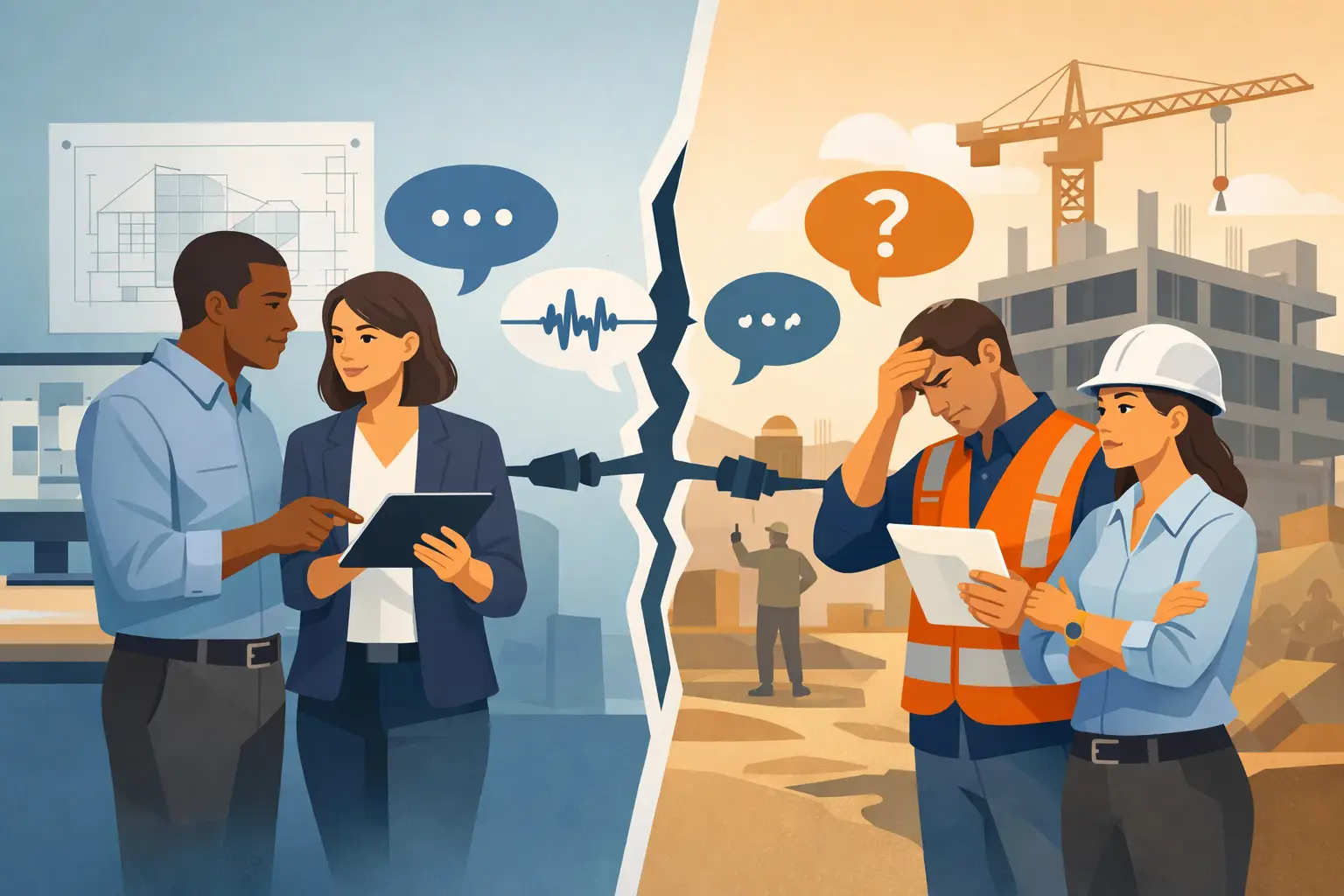

A new project management platform is announced. A merger changes reporting lines. A growth strategy calls for different behaviors across offices and disciplines. The plan may be sound, the business case may be clear, and the leadership team may be fully committed. Yet people still hesitate, work around the new process, or wait for the initiative to fade. Why do change initiatives fail? Usually, not because people are unwilling to improve, but because the human experience of change was treated as secondary to the plan.
For architecture, engineering, and construction firms, this matters deeply. Change rarely arrives at a convenient time. Leaders are balancing client commitments, project deadlines, utilization targets, field realities, and the need to protect quality. When an initiative feels disconnected from those realities, even capable people can become skeptical or fatigued.
The most effective leaders do not assume resistance is a problem to eliminate. They become curious about what it is trying to communicate.
Why Do Change Initiatives Fail Even With a Good Plan?
A strategic plan answers important questions: What are we changing? Why now? What results do we expect? But a plan alone cannot create adoption. People also need to understand how the change affects their work, relationships, credibility, workload, and ability to succeed.
That distinction is easy to miss in technically sophisticated organizations. AEC leaders are trained to solve complex problems through analysis, sequencing, clear specifications, and accountability. Those skills matter. But organizational change is not a construction schedule. People do not move through uncertainty at the same pace, and they do not experience a decision in the same way.
An executive may see a new operating model as a necessary step toward growth. A project manager may see another layer of coordination during an already demanding delivery cycle. A long-tenured employee may wonder whether hard-earned expertise is still valued. None of those reactions are irrational. They are information.
When leaders respond only with more explanation, more deadlines, or stronger compliance measures, they can unintentionally widen the gap. The initiative becomes something being done to people rather than something people can help shape and carry forward.
The Common Breakdowns Behind Failed Change
Leaders communicate the decision, but not the meaning
A kickoff meeting, an email from the CEO, and a slide deck can create awareness. They do not necessarily create understanding. People need a clear and credible connection between the change and the work they do every day.
This is especially true when the language of change is broad: innovation, transformation, efficiency, integration, culture. Those words can be meaningful, but only when leaders translate them into practical implications. What will a superintendent, discipline lead, business developer, or project accountant do differently? What will remain stable? What support will be available while they learn?
Meaning is not created through repetition alone. It is created through relevant conversation. Leaders who make space for questions often learn where the message is incomplete, confusing, or out of touch with operational conditions.
The organization mistakes silence for alignment
People do not always voice concerns in a town hall or leadership meeting. They may be protecting relationships, avoiding conflict, or unsure whether honest feedback is welcome. In firms with strong hierarchies or a history of initiatives that faded, silence can be a form of self-protection.
Then the warning signs surface later. Adoption is uneven between offices. Managers use different messages. Teams create unofficial workarounds. A new system exists, but critical decisions continue to happen through the old channels.
Real alignment is visible in behavior, not merely agreement in a meeting. It shows up when leaders can explain the change consistently, teams know how to make decisions within it, and employees can raise concerns without being labeled difficult.
Middle leaders are asked to carry change without enough support
Managers, project executives, and department heads often determine whether change becomes real. They are the ones fielding questions, resolving competing priorities, and helping teams interpret what a new direction means on Monday morning.
Too often, they receive the same announcement as everyone else, perhaps with a few talking points, and are expected to lead confidently. That creates an impossible position. They may have unanswered questions themselves, limited authority to address problems, and little time to coach others through the transition.
Supporting these leaders is not a soft add-on. It is operationally necessary. They need context before broad communication, room to surface risks, practical guidance for difficult conversations, and permission to share what they do not yet know. Credibility grows when leaders are honest about uncertainty while remaining clear about direction.
The pace ignores the organization’s capacity
Change fatigue is often described as a people problem. More often, it is a prioritization problem. Organizations launch a new technology, revise processes, restructure teams, and introduce leadership expectations at the same time, all while expecting client delivery to remain unchanged.
Some change is unavoidable, particularly during rapid growth, market shifts, or major transitions. Still, leaders can make more thoughtful choices about sequence. They can identify what must happen now, what can wait, and what existing work should stop to create capacity.
Every initiative asks people to invest attention, energy, and time. If leaders do not account for that investment, the organization pays anyway through inconsistent adoption, burnout, rework, and declining trust.
Early progress is not reinforced
Many initiatives receive intense attention at launch and little support after the first few months. The leadership team moves to the next priority, while employees are still figuring out how to apply the new approach in real situations.
Sustainable change requires reinforcement. That may include coaching managers, adjusting workflows, recognizing useful behaviors, sharing lessons from early adopters, and addressing barriers quickly. It also requires measurement that goes beyond attendance at training or completion of a rollout checklist.
A better question is: What evidence would tell us this change is becoming part of how we work? The answer may include faster decisions, fewer handoff errors, stronger cross-functional collaboration, more consistent project practices, or increased confidence among leaders. The right measures depend on the change, but they should reflect lived behavior, not just activity.
Curiosity Changes the Quality of the Conversation
Curiosity is not the same as indecision. A leader can hold a clear direction while remaining genuinely interested in how others are experiencing it. In fact, that combination often makes change more effective.
Instead of asking, “Why are people resisting?” try asking, “What might people be protecting?” The answer may reveal concerns about client service, quality, workload, identity, autonomy, or prior promises that were not kept. Those insights do not mean every concern should change the decision. They do mean leaders have better information for deciding how to implement it.
Useful questions are specific and practical:
- What will make this harder to use in a live project environment?
- Where are our messages inconsistent?
- What trade-off are we asking teams to make?
- What support would help managers lead this with confidence?
- What are we learning that should change our approach?
These questions create a different relationship with change. People are more likely to engage when they see that their experience is being heard and that feedback can influence the path forward.
How AEC Leaders Can Build Change That Lasts
Start by treating implementation as a learning process, not a one-time announcement. Before scaling an initiative across the organization, test assumptions with a representative group. Include people close to projects and operations, not only senior leaders. A pilot will not eliminate every issue, but it can expose practical friction before it becomes enterprise-wide frustration.
Next, give managers a meaningful role in shaping the story. They do not need a perfectly scripted message. They need enough clarity to connect the change to their team’s reality and enough trust to have an honest conversation. When they can say, “Here is what we know, here is what is still being worked out, and here is how you can help us improve it,” they model steadiness rather than false certainty.
Finally, be willing to adapt without losing focus. Adjusting training, timing, resources, or workflows in response to what teams are learning is not a sign of weak leadership. It is evidence that the organization is paying attention. The goal is not flawless execution. It is meaningful progress that people can sustain.
Change becomes more durable when leaders stop asking people simply to comply and start inviting them to participate in building the future. The next useful conversation may begin with a question: What is this change asking of our people, and how can we lead them through it with greater clarity, trust, and curiosity?
Engage Ryan to be your next keynote speaker
Ryan's Keynotes are the sparks of insight and relatable stories that function as connective tissue that helps ignite your curiosity, allowing you to begin building a stronger relationship to change.